Ein Tag in unserem Werk in Yangon, Myanmar – vom Arbeitsbeginn um 7:30 bis zum Feierabend um 18:00: eine virtuelle Werksbesichtigung in Fotos

„Wir würden das Werk in Yangon gern besichtigen, aber die Zeit fehlt einfach …“ Als Antwort auf diesen oft gehörten Satz unserer Kunden führen wir Sie in vier Szenen durch einen Tag im Werk von Better Bags Myanmar – vom Arbeitsbeginn bis zum Feierabend, mit offenem Blick auf einen Betrieb mit insgesamt rund 600 Mitarbeitenden (Nähkräfte und Hilfspersonal).
Ein Tag in unserem Werk in Yangon, Myanmar – vom Arbeitsbeginn um 7:30 bis zum Feierabend um 18:00: eine virtuelle Werksbesichtigung in Fotos
„Wir würden das Werk gern besichtigen, aber bis nach Yangon …“ – vier Szenen aus der Fertigung, ausgehend von dem, was Kunden uns wirklich sagen
„Ich würde gern selbst nach Yangon fahren und mir alles mit eigenen Augen ansehen. Aber realistisch betrachtet finde ich einfach nie die Zeit dafür …“
Das ist einer der ehrlichsten Sätze, die wir in Erstgesprächen mit japanischen Kunden immer wieder hören.
Genau deshalb legen wir so viel Wert darauf, Ihnen zuerst „alles in Fotos zu zeigen“.
Zum Einstieg – „Sehen möchten, aber schwer hinkommen“ – diese Lücke schließen wir zuerst mit Fotos
Eine Werksbesichtigung in Myanmar lässt sich nicht nebenbei organisieren. Direktflüge aus Japan sind begrenzt, und zwischen Visumsformalitäten, Terminplanung vor Ort und Sicherheitsabklärungen kommt für einen einzigen Besuch auf Kundenseite einiges an Vorbereitung zusammen.
Doch eines wissen wir sehr genau:
Für unsere japanischen Kunden ist es auch nach 20 Jahren keine Kleinigkeit, die Fertigung der eigenen Produkte einem Ort anzuvertrauen, den sie nicht mit eigenen Augen gesehen haben.
Deshalb zeigen wir Ihnen zunächst Fotos. Die Unmittelbarkeit einer Besichtigung vor Ort können sie nicht ersetzen. Unser Anspruch ist jedoch: Ihnen so ehrlich und so nah wie möglich das zu zeigen, was Sie bei einem Besuch tatsächlich sehen würden – genau das ist das Anliegen dieses Beitrags.
In diesem Beitrag führen wir Sie in vier Szenen durch „einen Tag“ im Werk von Better Bags Myanmar in Yangon. Die Lektüre dauert etwa 8 Minuten.
7:15 Uhr – 15 Minuten vor Arbeitsbeginn
Der Morgen im Werk beginnt ruhig.
Industriegebiet NGWE PIN LAI, Yangon. Die Mitarbeitenden passieren das Werkstor und gehen zu ihren Arbeitsplätzen. Im Werk von Better Bags Myanmar arbeiten rund 370 Nähkräfte, dazu mehr als 100 Hilfskräfte für Zuschnitt, Vorbereitung, Verpackung und Versand sowie die Teams für Verwaltung, QC und Logistik – insgesamt rund 600 Menschen, die hier Tag für Tag Taschen fertigen※1.
Um 7:15 geben die Linienleiter je Linie ein kurzes Briefing zu den SKUs des Tages, den Stückzahlen und den Prioritäten. Auch die Übergabepunkte vom Vortag – zum Beispiel: „Beim gestrigen Los wurde die Befestigung des Reißverschluss-Zippers auf △△ umgestellt, heute bitte im selben Verfahren fortfahren“ – werden hier geteilt.
Ein großes Ritual gibt es dabei nicht. Aber dieses gemeinsame Verständnis – „auch heute in derselben Qualität, nach demselben Verfahren“ – ist unsere morgendliche Routine.
7:30 Uhr – die Welt von Zuschnitt und Vorbereitung
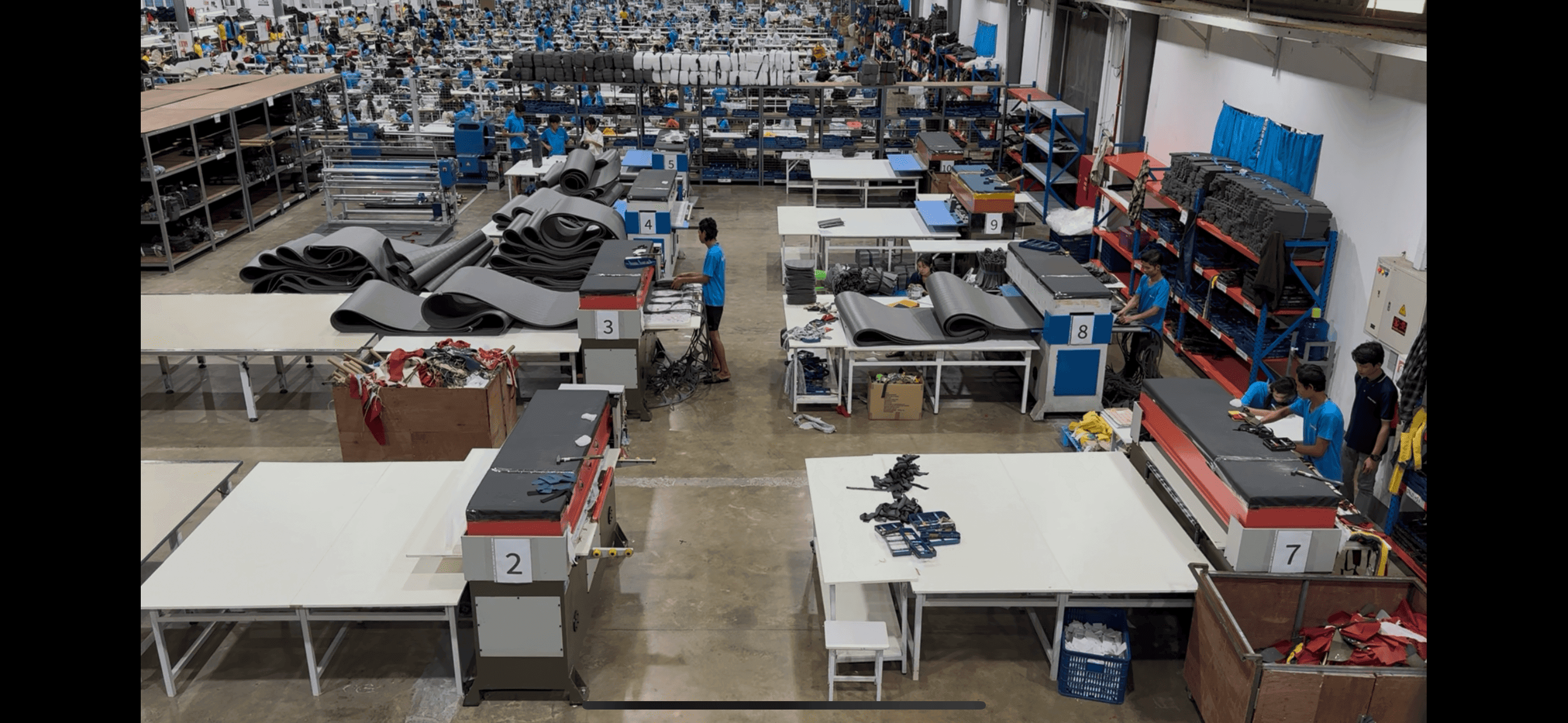
Um Punkt 7:30 Uhr wird die Stromversorgung des Werks eingeschaltet. Als Erstes erwachen Zuschnittraum und Vorbereitungsraum.
Beim Wort „Nähfabrik“ denken die meisten an eine Halle voller Nähmaschinen. Tatsächlich stehen aber, bevor eine einzige Tasche entsteht, schon vor dem Nähen zahlreiche Arbeitsschritte an.
- Eine Zuschneidemaschine schneidet Außenstoff, Futter und Taschenteile exakt nach Schnittmuster zu
- EVA-Einlagematerial (Backing) wird Panel für Panel zugeschnitten
- Durch Kleben und Heißverpressen werden Verstärkungsteile auf dem Trägermaterial fixiert
- Eine Niet- / Ösenmaschine bereitet Reißverschlussschienen und Aufnahmen für Beschläge vor
- Alle Teile werden je SKU zu einem „Materialset“ zusammengestellt
- Die Sets werden auf Wagen geladen und an die Nählinien geliefert
Das Foto zeigt den Vorbereitungsraum an einem gewöhnlichen Tag. Die Werktische sind von 1 bis 10 nummeriert, jeder ist für einen eigenen Bearbeitungsschritt zuständig. Die grauen Rollen im Vordergrund sind das EVA-Material für die Rückenpolster der Taschen.
Viele Besucher bleiben genau hier stehen. „Ich hätte nicht gedacht, dass es so viele Vorbereitungsschritte gibt“ – diesen Satz hören wir immer wieder.
9:30 Uhr – die Nählinien laufen auf voller Leistung
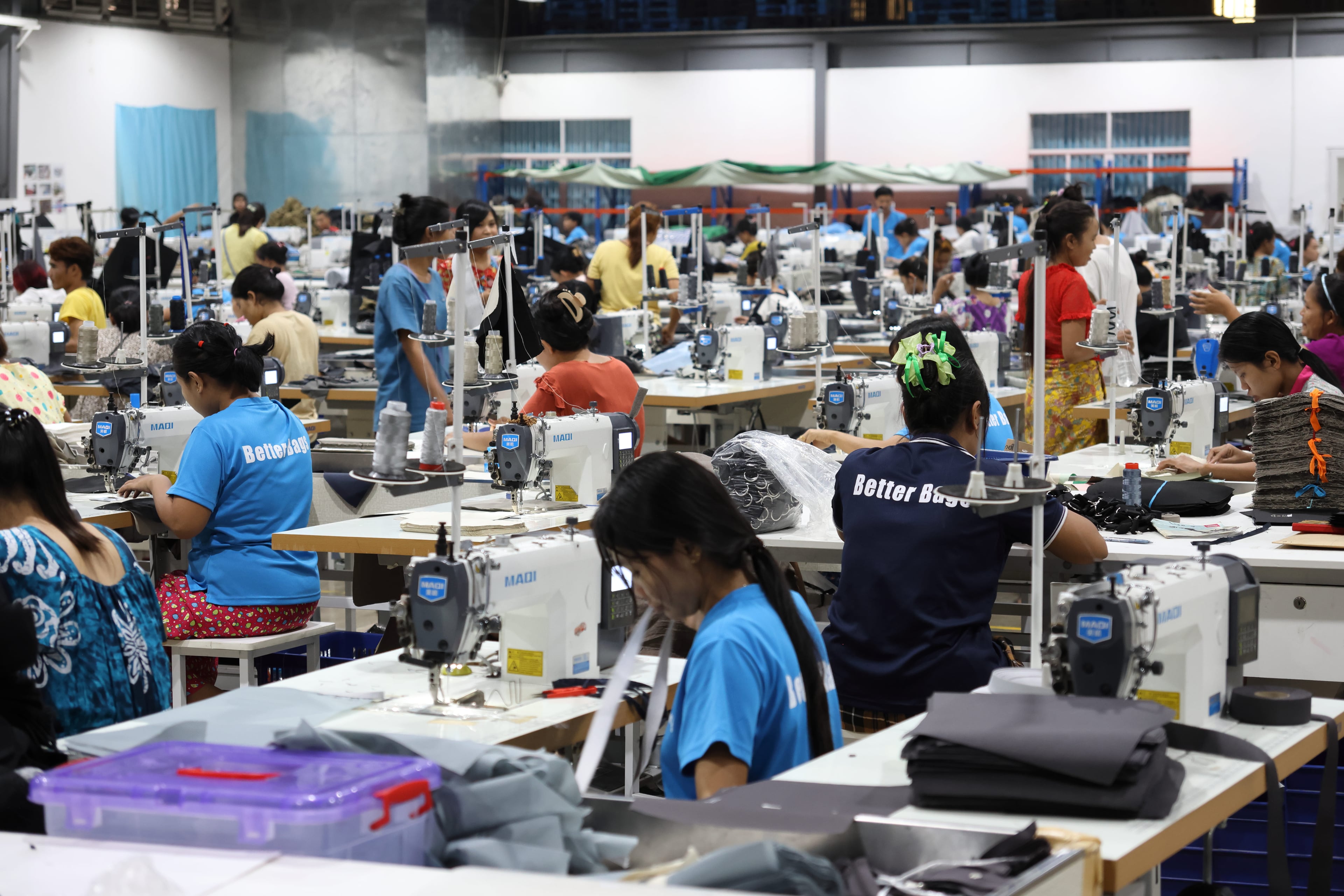
Die im Vorbereitungsraum zusammengestellten „Materialsets“ erreichen die einzelnen Nählinien. Gegen 9:30 Uhr ist die gesamte Linie im vollen Regelbetrieb.
Das Foto zeigt die Haupthalle des Werks in Yangon. Die meisten unserer rund 370 Nähkräfte arbeiten hier Tag für Tag. Das Rückgrat bilden Industrienähmaschinen von MAQI, die je nach Einsatzzweck wie folgt verteilt sind:
- Flachbettmaschinen: 420
- Computergesteuerte Maschinen: 48
- Säulenmaschinen: 60
- Zweinadelmaschinen: 12
Von Besuchern hören wir häufig denselben Satz: „Lauter, als ich erwartet hätte.“ Und tatsächlich: Eine Halle, in der mehr als 300 Nähmaschinen gleichzeitig laufen, ist kein leiser Ort. Das stetige Klappern der Maschinen liegt wie ein tiefes Summen über der gesamten Fläche.
Wer jedoch genauer hinsieht, erkennt in diesem Rhythmus eine bestimmte Regelmäßigkeit. Eine Person, ein Arbeitsschritt, den ganzen Tag wiederholt. Diese einzelnen Rhythmen verdichten sich zum „Betriebsgeräusch“ der ganzen Halle – das ist kein Chaos, sondern der Klang einer vielschichtigen Ordnung.
11:00 Uhr – Hände, die sich auf jeden einzelnen Stich konzentrieren
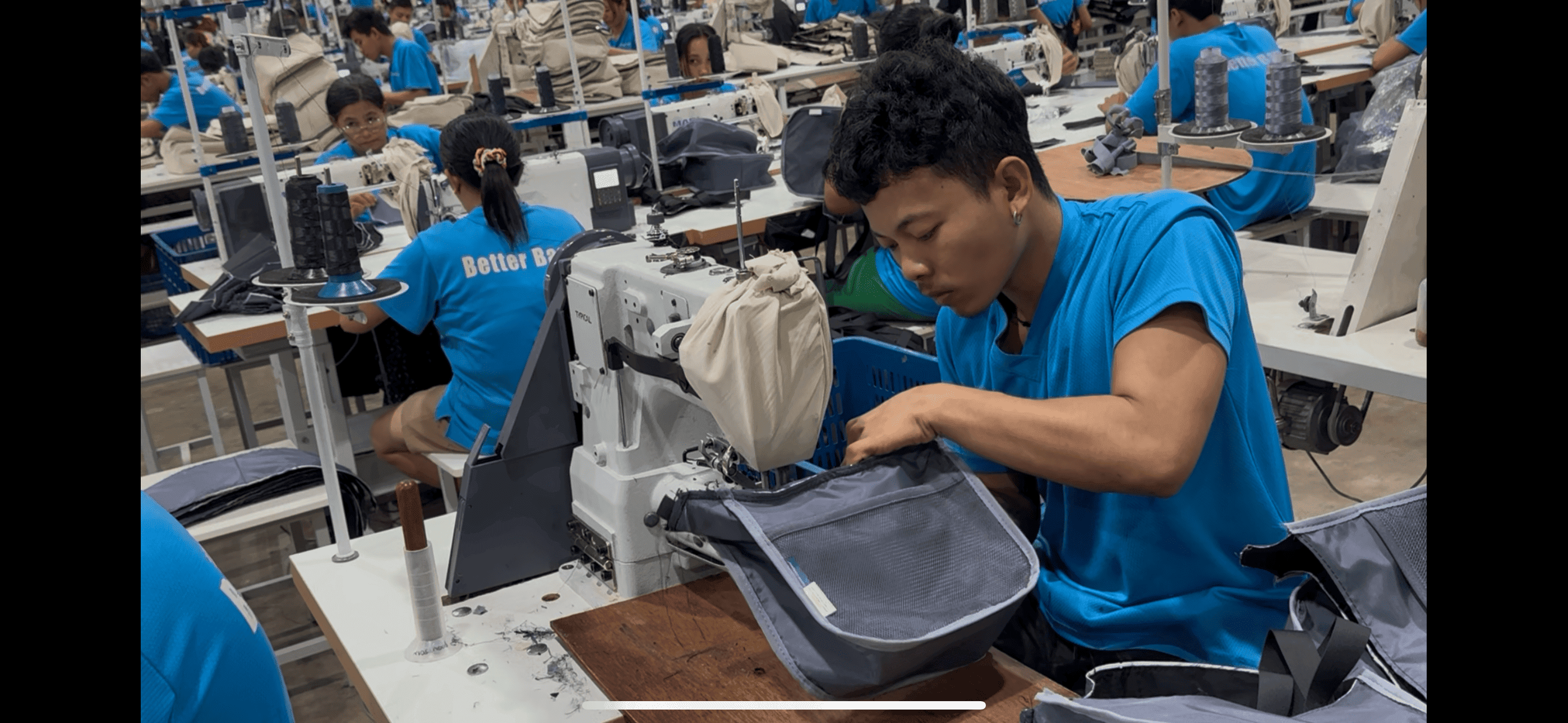
Gegen 11 Uhr erreichen alle Linien einen stabilen Betrieb.
Gehen wir etwas näher heran und schauen einer einzelnen Fachkraft über die Schulter. Hier wird eine Tasche aus Mesh-Gewebe auf das Hauptpanel genäht. Am Ansatz der Rundung gerät die Naht besonders leicht aus der Spur, deshalb geht es langsam voran, Stich für Stich kontrolliert.
Diese Fachkraft hat die Einarbeitung nach der Einstellung durchlaufen und ist heute auf den Arbeitsschritt der Rucksack-Seitentaschen spezialisiert. Wer denselben Arbeitsschritt ein Jahr, zwei Jahre lang ausführt, entwickelt ein sicheres Gespür für die feine Dehnung des Stoffes und dafür, wie ein Stich „sitzen“ muss.
Unseren japanischen Kunden sagen wir dazu häufig Folgendes –
„Ein Hybrid aus Zellenfertigung und Linienspezialisierung“
Wenn eine Person einen einzigen Arbeitsschritt beherrscht, steigen Tempo und Präzision. Bei komplex aufgebauten Rucksäcken wiederum greifen wir auf den Ansatz der Zellenfertigung zurück, den wir seit vielen Jahren mit I-pack※2 teilen – so gelingt der Wechsel zwischen Modellen schnell.
Diese Balance haben wir 20 Jahre lang immer weiter verfeinert.
Zum Thema: unsere Zusammenarbeit mit dem unabhängigen Inspektionspartner I-pack →
14:00 Uhr – ein zweites Augenpaar für den Überblick
14 Uhr. Die Produktionssteuerung und die Linienleiter gehen auf ihrem regelmäßigen Rundgang durch die Halle.
Um diese Zeit sind die am Vormittag zusammengestellten „Materialsets“ auf den Linien in der Näharbeit weit fortgeschritten – der Tag geht in seine zweite Hälfte. Die Linienleiter prüfen die Fortschrittstafel jeder Linie und vergleichen den Stand mit dem Tagesziel. Liegt eine Linie zurück, wird Unterstützung eingeteilt; liegt eine Linie vorn, beginnt sie vorgezogen mit den Sets für den nächsten Tag.
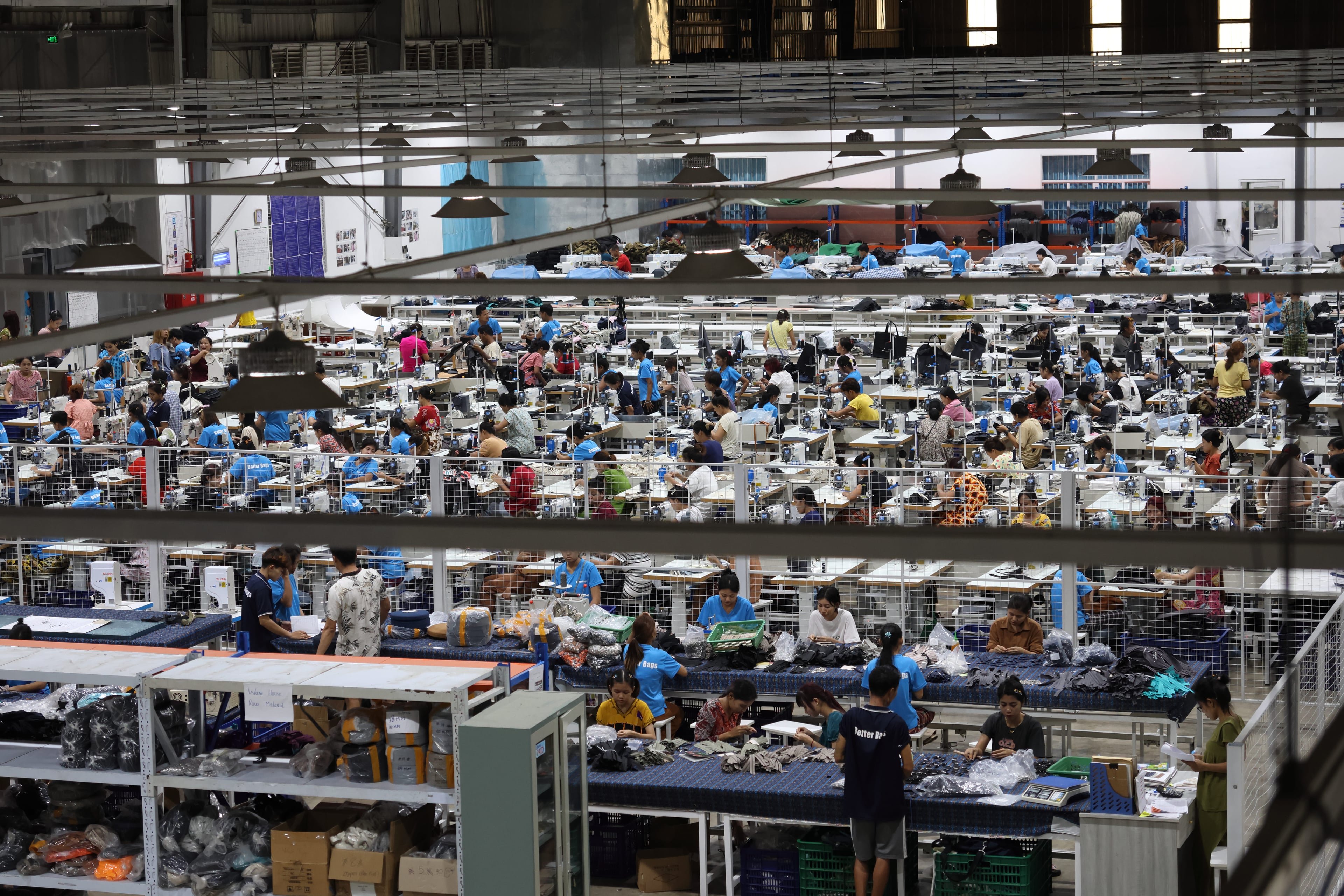
Das Foto zeigt die Haupthalle von oben. Vorne liegt die Vorbereitungsgruppe, dahinter erstrecken sich die Nählinien.
In das Layout dieser Halle ist viel Sorgfalt geflossen:
- Hohe Decken: für die Belüftung im Sommer und für Tageslicht. In der Regenzeit bedeutet das allerdings einen ständigen Kampf gegen die Feuchtigkeit.
- Breite Abstände zwischen den Linien: getrennte Wege für Personen, für Transportwagen und für die Evakuierung im Notfall.
- Verpackungs- und Sortierbereich „vor“ den Nählinien: Nählinie → Inspektion → Verpackung → Versand verläuft so räumlich wie logisch in einer geraden Linie.
„Kein spektakuläres Werk – aber ein durchdachtes.“ Diesen Satz haben wir mehrfach von japanischen Qualitätsverantwortlichen gehört, die uns besucht haben. Er gehört zu den Dingen, auf die wir stolz sind.
16:00 Uhr – Vorbereitung der Inspektion und Übergabe an I-pack
Gegen 16 Uhr geht ein Teil der Tagesproduktion in die Inspektion.
Produkte, die die interne Prüfung durchlaufen haben (IPQC → FQC → 100%-Kontrolle aller Stücke mit dem X-ray-Nadeldetektor Fjade SECUT-5030D※3), werden an die Vor-Ort-Inspektionsstelle von I-pack in Myanmar übergeben. Ein unabhängiger Blick, der noch einmal alles prüft – die letzte Stufe unserer dreistufigen Verteidigungslinie.
Was die Inspektion im Einzelnen umfasst, beschreiben wir in den „Schwesterbeiträgen“ dieser Serie, in unserer Qualitätsserie:
- Unsere interne Nadelkontrolle nach dem Prinzip „keine einzige Nadel entkommt“ → Qualitätsserie Vol.01
- Die Zusammenarbeit mit dem unabhängigen Prüfpartner I-pack → Qualitätsserie Vol.02
17:30 Uhr – Tagesabgleich und Vorbereitung auf den nächsten Tag
17:30 Uhr. Überall auf den Linien beginnt der geordnete Tagesabschluss.
- Tagesabgleich: Abgleich der Zahl der verwendeten und der gebrochenen Nadeln (Nadelkontrollregister)
- Umgang mit Fehlerware: Korrektur oder Aussonderung kleinerer Mängel, die im Tagesverlauf entdeckt wurden
- Prüfung der Materialsets für morgen: Übergabe an den Vorbereitungsraum für den frühen Morgen
„Der Tag endet erst, wenn der Abgleich stimmt.“ Darüber haben wir im Schwesterbeitrag Vol.01 dieser Serie ausführlich geschrieben – es ist unsere wichtigste Regel, unverändert seit 20 Jahren.
Linienleiter und Verwaltungsverantwortliche setzen die abschließenden Unterschriften.
18:00 Uhr – Feierabend
Um 18 Uhr schaltet die Werksbeleuchtung von den Hauptarbeitsleuchten auf die Sicherheitsbeleuchtung um.
Die Nähkräfte räumen ihre Arbeitsplätze auf, legen die Produkte an ihren vorgesehenen Platz zurück und verlassen das Werk.
Der Abendhimmel über Yangon zeigt in der Regenzeit das Grau der Regenschauer, in der Trockenzeit ein weiches Orange. So setzt sich das Herz der Fertigung fort – bis zum nächsten Morgen um 7:45.
Fünf häufige Fragen unserer Kunden (zur Werksbesichtigung)
Hier haben wir die fünf Fragen zusammengestellt, die uns Kunden am häufigsten stellen, wenn sie nach diesem „Tag in Fotos“ einen Besuch vor Ort erwägen.
| Ihre Frage | Unsere Antwort |
|---|---|
| „Ist eine Online-Besichtigung (Live-Übertragung per Videokonferenz) möglich?“ | Ja. Wir übertragen live über ZOOM, Microsoft Teams, WeChat und ähnliche Dienste. Eine Sitzung dauert in der Regel 30 bis 60 Minuten; die Besichtigungspunkte stimmen wir vorab mit Ihnen ab. |
| „Wie viel Zeit ist für einen Besuch vor Ort einzuplanen, und wie sieht der Ablauf aus?“ | Am üblichsten ist ein halber Tag (vormittags oder nachmittags). Flughafentransfer, Hotelempfehlungen und Dolmetscher organisiert unser Team für Sie. |
| „Gibt es Unterstützung bei Visum und Sicherheit?“ | Ja. Vor Ihrer Abreise informieren wir Sie umfassend über das E-Visum-Verfahren, den Transport vor Ort, empfohlene Hotels und den Flughafentransfer. Sicherheitsinformationen teilen wir stets auf aktuellem Stand. |
| „Darf im Werk fotografiert und gefilmt werden?“ | In den allgemeinen Bereichen grundsätzlich ja. In einzelnen Zonen – etwa dort, wo parallel Projekte von Wettbewerbern Ihres Unternehmens laufen – bitten wir jedoch, auf Aufnahmen zu verzichten. Die Abgrenzung erläutern wir Ihnen vorab. |
| „Können außer dem Einkäufer weitere Personen mitkommen?“ | Externe Auditoren, Designer und Vertreter von Handelshäusern sind uns als Begleitung willkommen. Teilen Sie uns Anzahl und Funktion der Begleitpersonen bitte vorab mit, dann berücksichtigen wir sie im Besuchsplan. |
Zum Schluss – Fotos sind kein „Ersatz“ für eine Besichtigung
Bis hierhin haben wir Ihnen „einen Tag“ im Werk von Better Bags Myanmar in vier Szenen gezeigt.
Vom Zuschnittraum um 7:30 am Morgen bis zum Feierabend um 18:00 am Abend.
Wovon wir überzeugt sind, ist Folgendes:
Fotos sind kein „Ersatz“ für eine Besichtigung vor Ort. Sie sind ein „Auftakt“. Wenn die Bilder Ihnen ein Gefühl für diesen Ort geben und Ihr Interesse wecken, dann kommen Sie bitte einmal persönlich nach Yangon. Gehen Sie mit eigenen Augen, mit eigenen Händen und im Klang der eigenen Schritte durch unsere Fertigung.
Und für diesen Besuch bereiten wir alles vor, was uns möglich ist – und warten auf Sie.
Kontakt für Beratung und Besichtigung
Ob Beratung, Werksbesichtigung oder Musteranfrage: Wenden Sie sich mit Ihren Fragen jederzeit gern an uns.
Auch die Terminabstimmung für eine Online-Besichtigung nehmen wir laufend entgegen.
Quellen
- ※1 Personalstruktur des Werks: Better Bags Myanmar (Stand: Mai 2026) – rund 370 Nähkräfte + mehr als 100 Hilfskräfte für Zuschnitt, Vorbereitung, Verpackung und Versand + Teams für Verwaltung, QC und Logistik, insgesamt rund 600 Mitarbeitende.
- ※2 I-pack Co., Ltd.: unser langjähriger Partner für die unabhängige Inspektion. Ausführlich beschrieben in Qualitätsserie Vol.02.
- ※3 100%-Prüfung aller Stücke mit dem X-ray-Nadeldetektor Fjade SECUT-5030D: ausführlich beschrieben in Qualitätsserie Vol.01.
Verwandte Beiträge
【Qualitätsserie】Schwesterbeiträge
Über den Autor
Als Vertreter der nächsten Generation an der Spitze von Better Bags, einem familiengeführten Hersteller mit internationaler Ausrichtung, stütze ich mich auf mehr als 8 Jahre Studien- und Berufserfahrung in Pennsylvania, USA. Als Absolvent von Penn State University und Carnegie Mellon University bringe ich nachweisliche internationale Expertise sowie interkulturelle Kommunikationskompetenz in die Zusammenarbeit mit unseren Kunden und Partnern ein. Mein Anliegen ist es, die Stärken von Ost und West zu verbinden: hochwertige Produkte, reibungslose Projektkommunikation und verlässlicher After-Sales-Support für jeden Partner, ganz gleich, wo auf der Welt Sie tätig sind.